On 20 December 2013, at its 68th session, the United Nations General Assembly (UNGA) proclaimed 3 March – the day of signature of the Convention on International Trade in Endangered Species of Wild Fauna and Flora (CITES) in 1973 – as UN World Wildlife Day to celebrate and raise awareness of the world’s wild animals and plants. The UNGA resolution also designated the CITES Secretariat as the facilitator for the global observance of this special day for wildlife on the UN calendar. World Wildlife Day has now become the most important global annual event dedicated to wildlife.
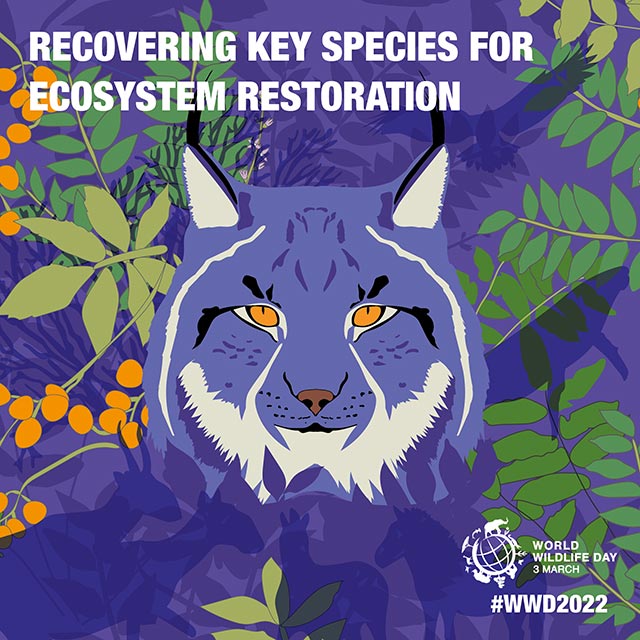
Recovering key species for ecosystem restoration
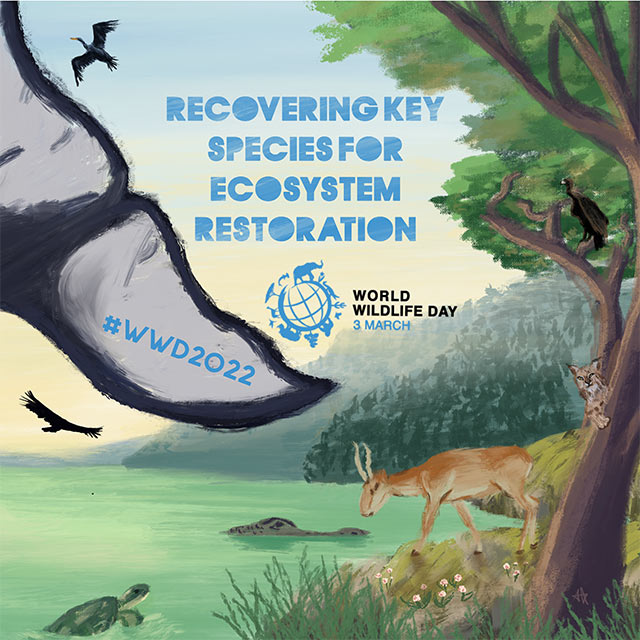
World Wildlife Day (WWD) will be celebrated in 2022 under the theme “Recovering key species for ecosystem restoration”. The celebrations will seek to draw attention to the conservation status of some of the most critically endangered species of wild fauna and flora, and to drive discussions towards imagining and implementing solutions to conserve them. All conversations will be inspired by and seek to inform efforts towards the achievement of UN Sustainable Development Goals 1 (No Poverty), 2 (Zero hunger) 12 (Ensure sustainable consumption and production patterns), 13 (Climate Action) 14 (Life Below Water) and 15 (Life on Land).
According to data from the International Union for Conservation of Nature (IUCN) Red List of Threatened Species, over 8,400 species of wild fauna and flora are critically endangered, while close to 30,000 more are understood to be endangered or vulnerable. Based on these estimates, it is suggested that over a million species are threatened with extinction.
Continued loss of species, habitats and ecosystems also threatens all life on Earth, including us. People everywhere rely on wildlife and biodiversity-based resources to meet all our needs, from food, to fuel, medicines, housing, and clothing. Millions of people also rely on nature as the source of their livelihoods and economic opportunities.
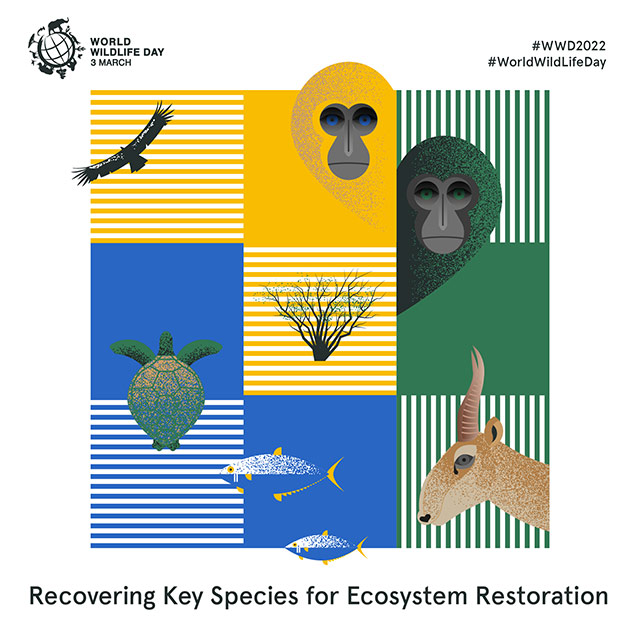
In 2022, World Wildlife Day will therefore drive the debate towards the imperative need to reverse the fate of the most critically endangered species, to support the restoration of their habitats and ecosystems and to promote their sustainable use by humanity.
Everyday wildlife protection:
Though World Wildlife Day is an annual celebration, wildlife conservation is an issue that needs attention and action every day.
The threats weighing on wildlife and biodiversity are often big and complex, so much so that individuals might feel powerless about them.
However, every person’s small actions add up, which can make a difference for species and ecosystems.
Learn more about how you can help make a difference and help wildlife conservation by visiting the website of the Convention on International Trade in Endangered Species or Wild fauna and Flora (CITES) to learn more on sustainable use of wildlife and biodiversity-based resources.
You can also more about vulnerable or endangered species by visiting the IUCN Red List of Threatened Species.