



Located south of Esch-sur-Alzette, on the border with Audun-le-Tiche, the Ellergronn Nature Reserve covers more than 110 hectares. Established in 1988 as one of Luxembourg’s first nature reserves, it is now an essential component of the Natura 2000 network and the protected core area of the UNESCO Biosphere.
This wooded valley owes its unique character to the presence of water, a rare feature in the generally dry landscapes that characterize many of the core zones of the Minett UNESCO Biosphere.
A landscape shaped by mining history
At first glance, Ellergronn appears to be a peaceful forest. Yet beneath the trees lies a rich industrial past.
Beginning in the late nineteenth century, iron ore was extracted here in the Collart and later the Cockerill mines. Unlike many other mining sites in the Minett region, where extraction mainly took place in open-pit mines, much of the ore at Ellergronn had to be mined through underground galleries due to its depth.
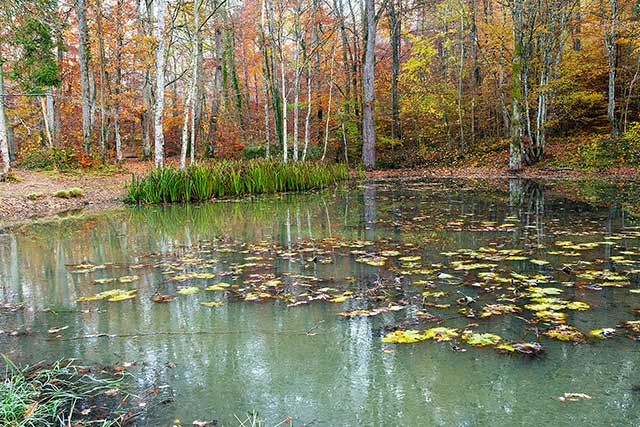
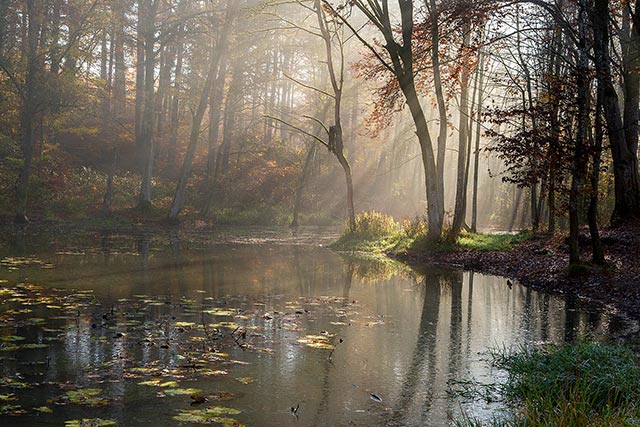
Mining activities profoundly transformed the landscape. Over time, abandoned galleries gradually collapsed, creating depressions, fissures and sinkholes that filled with water. These processes gave rise to a mosaic of ponds, pools and wetlands that today represent one of the site’s greatest ecological assets.
The Ellergronn landscape is therefore the result of two intertwined histories: the natural processes that have shaped the valley over thousands of years, and the human activities that transformed the territory before nature progressively reclaimed it.

Exceptional biodiversity in the heart of the Minett
Ellergronn hosts a remarkable diversity of habitats within a relatively compact area.
Visitors can discover rare calcareous beech forests, remnants of alluvial woodlands, forest ponds, wetlands, species-rich forest edges and a dry grassland that has developed on former mining spoil heaps.
Water plays a crucial role in maintaining this ecological balance. Impermeable marl layers beneath the Dogger limestone retain infiltrated water and feed numerous springs that sustain the valley’s characteristic humidity. This abundance of water supports an exceptionally rich flora and fauna.
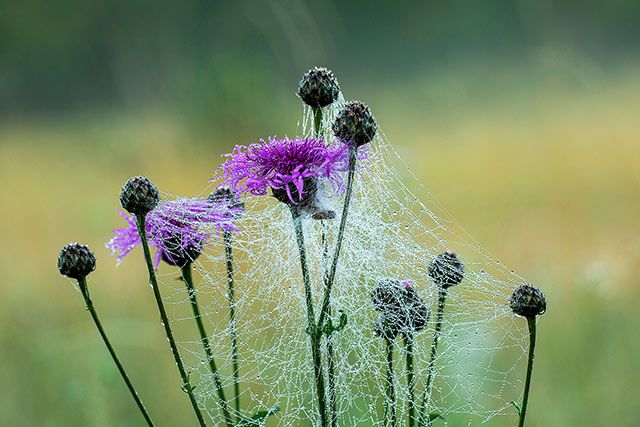
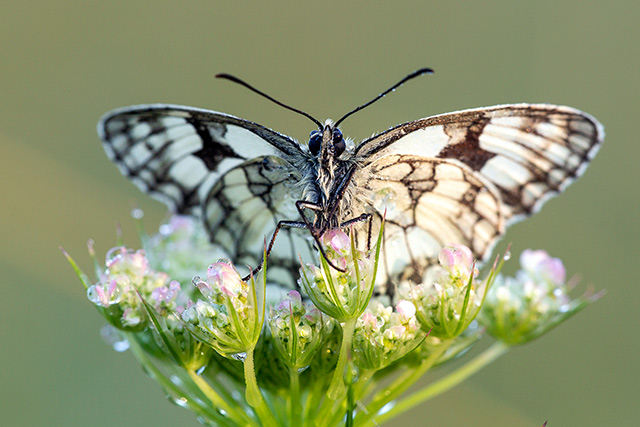
The former mining galleries provide winter shelters for several bat species, including species of European conservation interest. The ponds are home to protected amphibians such as the great crested newt, while open habitats and forest edges attract a wide range of insects, birds and butterflies.
The calcareous beech forests harbour a specialised flora that occurs only on particularly limestone-rich soils.
Exploring Ellergronn on foot
The best way to discover this core zone is on foot.
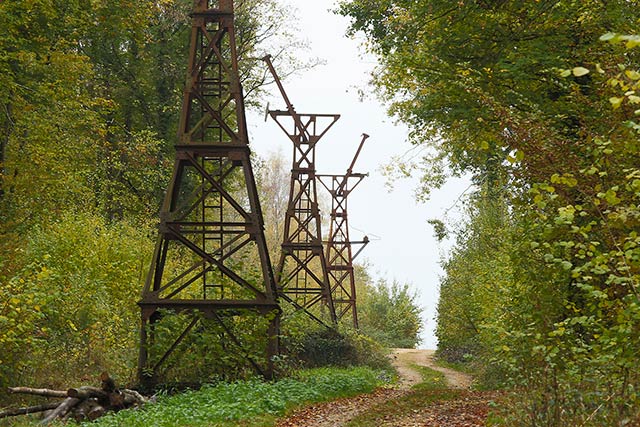
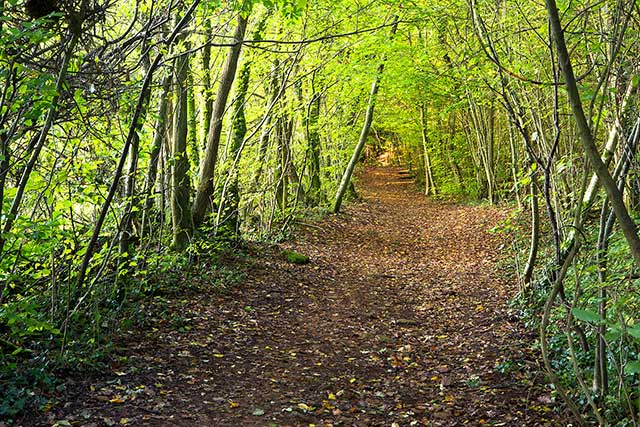
The main educational trail forms a loop of approximately three kilometres and allows visitors to explore the reserve’s principal habitats: forests, ponds, springs, dry grasslands and mining remains.
For visitors wishing to explore the site in greater depth, three additional Natura 2000 thematic loops are available:
- Loop A: People and the Forest (5 km)
- Loop B: Iron Ore Exploitation, Past and Present (4.5 km)
- Loop C: Vegetation Succession on a Former Mining Landscape (2.5 km)
Along the route, hikers discover how former mining infrastructure, underground collapses, ponds and forests together tell the story of the transformation of the Minett landscape.
 |
 |
 |
 |
 |
 |
© Marc Weis
A forest managed close to nature
Ellergronn also serves as a living laboratory for sustainable forest management.
Its forests are managed according to the principles of close-to-nature forestry, favouring natural regeneration, a diversity of tree species and forest structures, as well as the preservation of trees with high ecological value.
This approach promotes biodiversity while increasing the resilience of forest stands to climate change, storms and disease.
Certain areas are even left to evolve almost naturally, allowing visitors and researchers alike to observe the forest’s natural development processes.
What to see around Ellergronn
A visit to this core zone can easily be combined with several emblematic sites located nearby.
Centre Nature et Forêt Ellergronn
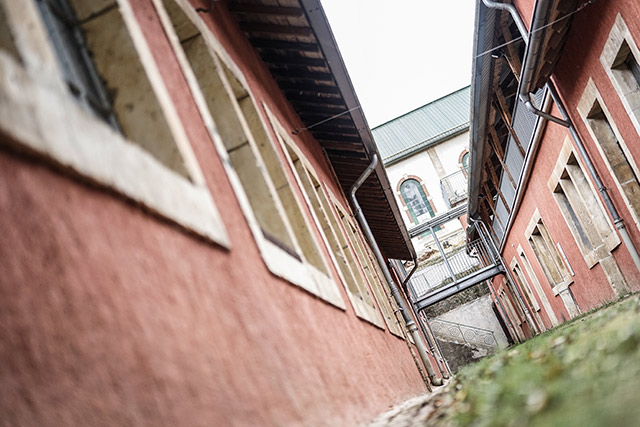
Housed in the restored buildings of the former Cockerill mine, this interpretation centre is the ideal gateway for understanding the links between mining heritage, biodiversity and nature conservation. Exhibitions, guided tours and educational activities are organised regularly throughout the year. A particular highlight is the Transition Now exhibition, which explores the challenges and opportunities of a sustainable future. 👉 Discover the Centre Nature et Forêt Ellergronn
Cockerill Mine Museum
Restaurant An der Schmëdd
After a hike, visitors can relax at this restaurant located in the heart of the historic Ellergronn site. Situated beside the nature centre, it offers cuisine inspired by regional products in a setting steeped in history. 👉 Eat at “An der Schmëdd”
Minett Trail
Gaalgebierg Park and Animal Park
 |
 |
 |
© Esch2022 / Emile Hengen
A symbol of the Minett UNESCO Biosphere
Ellergronn perfectly embodies the identity of the Minett UNESCO Biosphere.
The industrial past has not disappeared. It remains visible in the landscape, the buildings, the former galleries and the preserved infrastructure. At the same time, nature has reclaimed these former industrial spaces and transformed them into valuable habitats for wildlife.
What was once a land of miners has become a refuge for biodiversity, a place of discovery for visitors and an outstanding example of the coexistence of cultural and natural heritage.
A visit to Ellergronn offers a clear illustration of one of the founding principles of UNESCO Biosphere Reserves: protecting nature while valuing the history, landscapes and identity of the territories that sustain it.