


From mid-November 2026, scrub clearance will take place at Kiemerchen, along the truck track. The aim is to create a more varied woodland edge that supports wildflowers, insects and, in particular, butterflies.
A natural corridor connecting habitats
|
In the “Kiemerchen” core area of our biosphere reserve, nature is getting a helping hand. The planned works involve reshaping the vegetation along the woodland edge by creating openings known as scallops. These spaces will allow more light to reach the ground and encourage a flower-rich herbaceous layer to develop. Over time, the woodland edge should become more varied, with a mix of trees, shrubs and sunny open areas. This diversity of habitats will provide new food sources and suitable habitats for many insects, particularly butterflies. Beyond enhancing local biodiversity, the works have another key objective: strengthening ecological connections between different natural areas. Butterflies need flower-rich habitats to feed and move around. When these habitats are too isolated, their populations may struggle to disperse. |
|
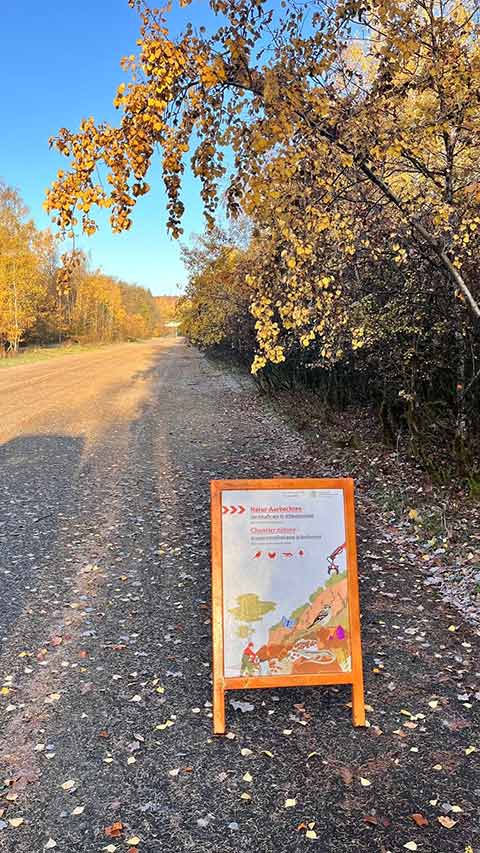
By creating a more open, flower-rich woodland edge along the former truck track, the project aims to establish a genuine ecological corridor. This should make it easier for butterflies to move between different habitats and help protect them.
Former open-cast mining sites: valuable refuges for butterflies
The former open-cast mining sites of the Minett are home to remarkable biodiversity, particularly thanks to their dry grasslands, rocky habitats and open spaces.
According to the 2024 annual report of the Natura 2000 steering committee “Minetter Dagebaugebidder”, 60 butterfly species were recorded at the former mining sites, compared with 49 in the rest of Luxembourg during the same year. These findings highlight the importance of these habitats for butterfly conservation nationwide.
It is also worth recalling the challenges involved in protecting certain threatened species, particularly the marsh fritillary. Efforts to restore their habitats, including at Kiemerchen, continued in 2025.
Clearing scrub to protect habitats
Although scrub clearance may sometimes seem contradictory in a protected natural area, it is an important tool for preserving certain habitats.
Without intervention, shrubs and trees can gradually take over open habitats, reducing sunlight and the space available for plants typical of dry grasslands.
The works at Kiemerchen are therefore part of a broader approach to the ecological management of former mining sites, where conserving biodiversity also involves maintaining and restoring habitats.
By giving wildflowers more light and space, these measures will help make the landscape more welcoming to butterflies and many other species.