


On the outskirts of Schifflange, Dumontshaff reveals a restored valley shaped by water, meadows and the seasons. A family-friendly educational trail invites visitors to discover this landscape, where birds, wild plants and water buffalo live alongside one another to the rhythm of the Alzette.
 |
 |
 |
 |
 |
 |
© Marc Weis
A living valley at the heart of the Minett UNESCO Biosphere
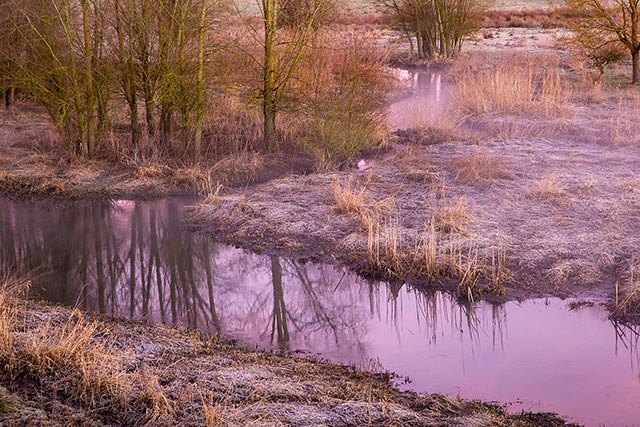
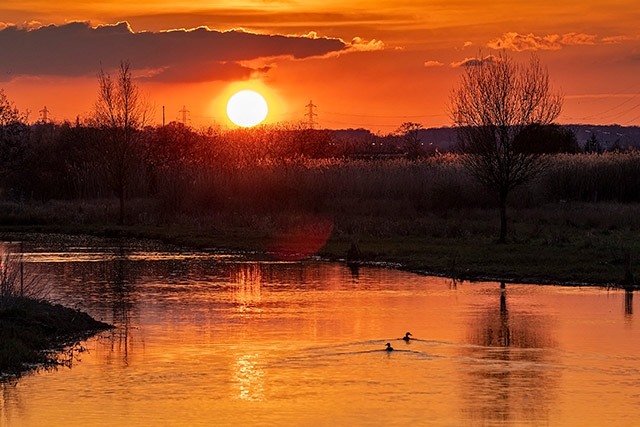
Just minutes from the centre of Schifflange, this broad floodplain reveals another side of southern Luxembourg, far removed from its red cliffs and former open-cast mines. Here, the Alzette and the Kiemelbaach wind between wet meadows, reed beds, pastures and willow groves.
Extending across Schifflange, Mondercange and Bettembourg, the Dumontshaff buffer zone was designated a protected area of national interest in 2023. It forms an important part of the Natura 2000 site “Vallée supérieure de l’Alzette”.
Within the Minett UNESCO Biosphere, it illustrates a principle of biosphere reserves: protecting biodiversity while allowing human activities compatible with the functioning of ecosystems.
Giving water its space back
During the 20th century, the Alzette was straightened, deepened and largely disconnected from its floodplain to drain water more quickly and facilitate intensive farming. These alterations dried out wetlands, destroyed habitats and accelerated flows during floods, contributing to two historic floods in the early 1990s.
Between 2004 and 2007, extensive restoration works widened the riverbed and moved it back to the lowest part of the valley. Side channels, shallow-water areas and land subject to temporary flooding were restored. The Kiemelbaach also regained a more natural course.
The river can now overflow into the floodplain again, which acts like a sponge: it stores water temporarily, slows floodwaters and gradually releases the water during drier periods. This dynamic reduces the risk of flooding downstream and recreates a range of habitats.
A haven for birds
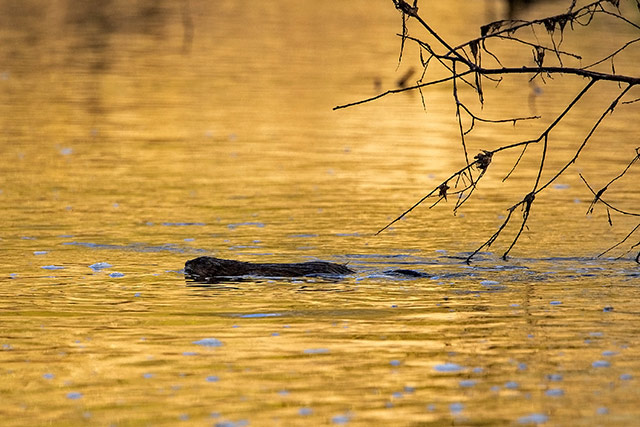
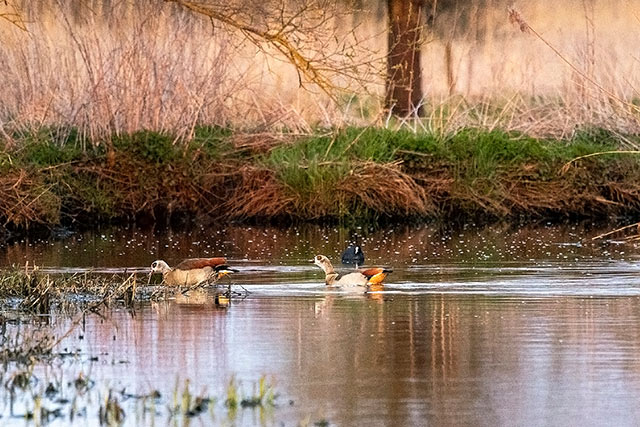
Popular with ornithologists, Dumontshaff provides resting, feeding and nesting places for many birds thanks to its shallow waters, reed beds, wet meadows and natural banks.
Historical surveys from 1924 to 2009 recorded 144 species, including 66 observed during the breeding season. Following habitat restoration, the little grebe (Tachybaptus ruficollis), common moorhen (Gallinula chloropus), little ringed plover (Charadrius dubius), common kingfisher (Alcedo atthis) and white stork (Ciconia ciconia) are among the species that have returned or become newly established.
With patience and discretion, visitors may spot a heron lying in wait, a great egret in a wet meadow or the blue-and-orange flash of a kingfisher flying over the water. The valley also hosts many migrating and wintering birds in autumn and winter.
To observe them, walk slowly, keep your distance and bring binoculars if possible.
Water buffalo, the landscape’s gardeners
Along the trail, you may encounter the water buffalo, the site’s most conspicuous residents. Hardy and adapted to wetlands, they carry out much of its natural upkeep.
Their extensive grazing prevents shrubs and young trees from taking over the meadows. It maintains an open landscape of short grassland, wet meadows, reed beds and taller vegetation, each providing different living conditions for plants, insects and birds.
The project thus combines ecological restoration and agriculture: appropriate land management can help protect nature.
A mosaic of wetland habitats
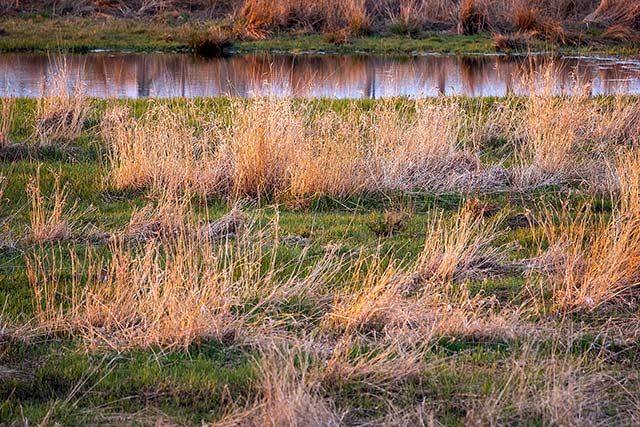
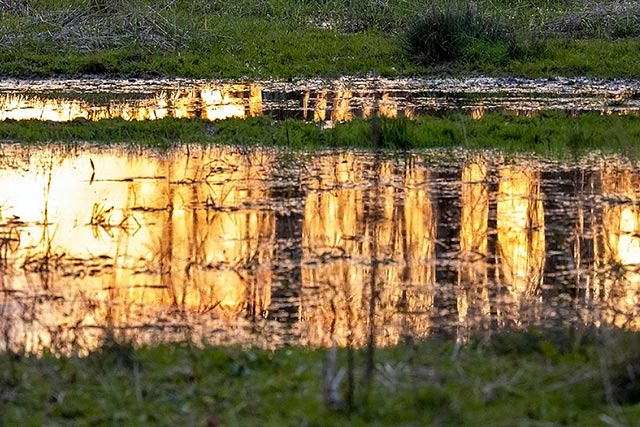
Within a limited area, restoration has encouraged varied vegetation: reed beds, temporarily flooded meadows, bankside vegetation, large sedges, ponds and willow stands.
Surveys recorded 254 plant species between 2006 and 2008. In 2009, 191 species were still recorded, including 37 considered rarer and enjoying protected status in Luxembourg at the time.
This richness emerges in the details: a flower beside the path, a dragonfly on a stem, birdsong in the reeds or tracks in the mud after the water has receded. Observation and silence guide the discovery.
An educational trail for the whole family
The educational trail offers an easy circular walk of around 4.87 kilometres, taking approximately 1 hour and 15 minutes, excluding stops for observation. With an elevation difference of just 17 metres, it suits families and visitors wishing to explore the reserve at a leisurely pace.
This open-air laboratory presents the restoration of the Alzette, wetland habitats, birdlife, extensive grazing and the evolution of the landscape.
A different walk in every season
Accessible throughout the year, Dumontshaff changes with the seasons. In spring, birdsong accompanies the return of vegetation. Summer reveals the details of meadows, reeds and insects. Autumn brings morning mists and migrating birds. In winter, bare trees reveal the structure of the floodplain and the Alzette’s meanders.
After heavy rain, parts of the landscape may be flooded: this is a natural function, not a malfunction. As the paths can become muddy, bring sturdy shoes or boots.