


The global network of biosphere reserves continues to grow. On the occasion of World Environment Day 2026, UNESCO announced the integration of 14 new biosphere reserves into the Man and the Biosphere (MAB) Programme. The global network now includes 797 reserves across 145 countries.
For the Minett UNESCO Biosphere, Luxembourg’s first biosphere reserve, designated in 2020, these new designations are an opportunity to discover new approaches, identify future partners and draw inspiration from innovative experiences developed in other regions of the world.
A global network in constant evolution
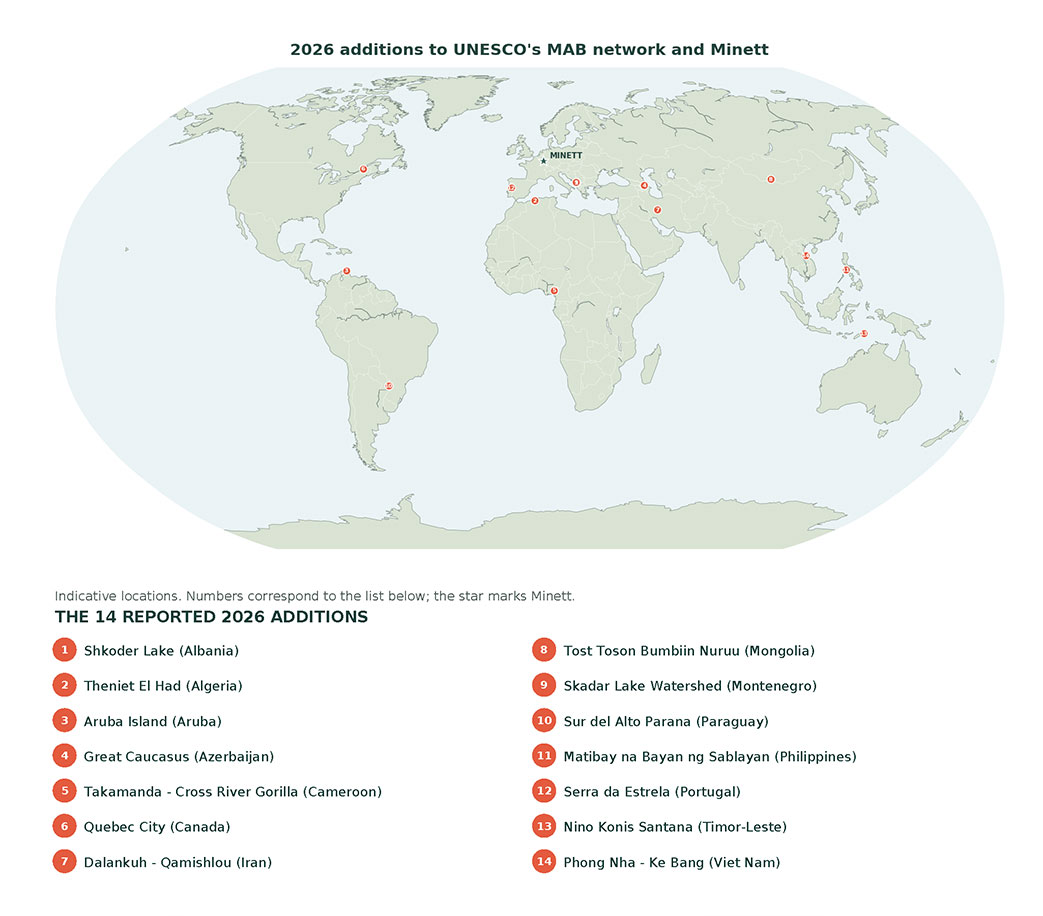
The 14 new sites designated in 2026 are located in Albania, Algeria, Aruba, Azerbaijan, Cameroon, Canada, Iran, Mongolia, Montenegro, Paraguay, the Philippines, Portugal, Timor-Leste and Viet Nam.
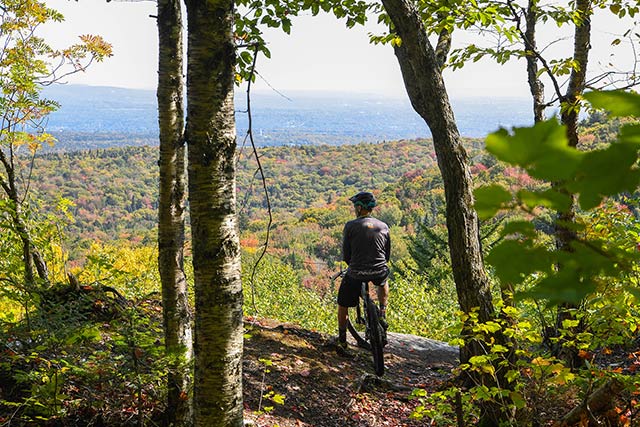
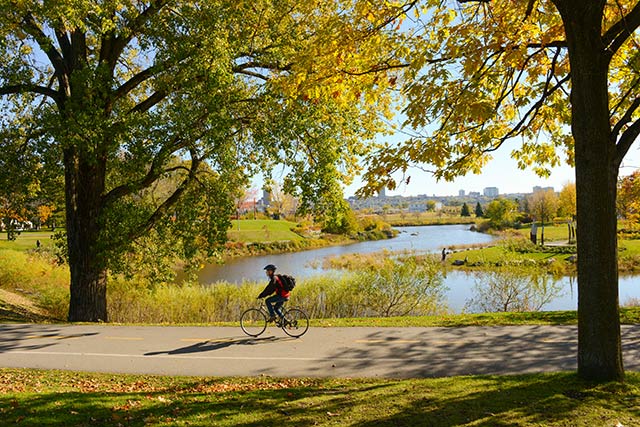
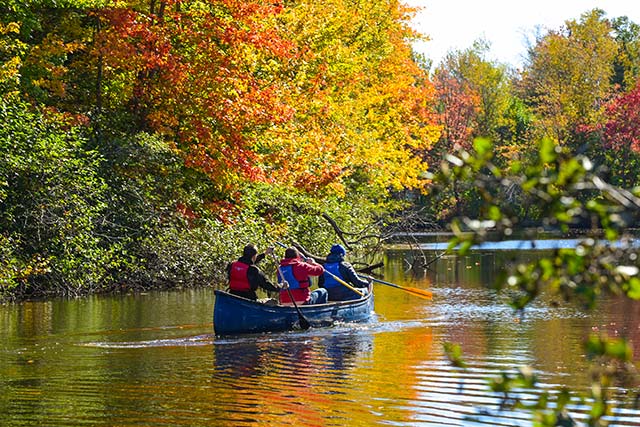
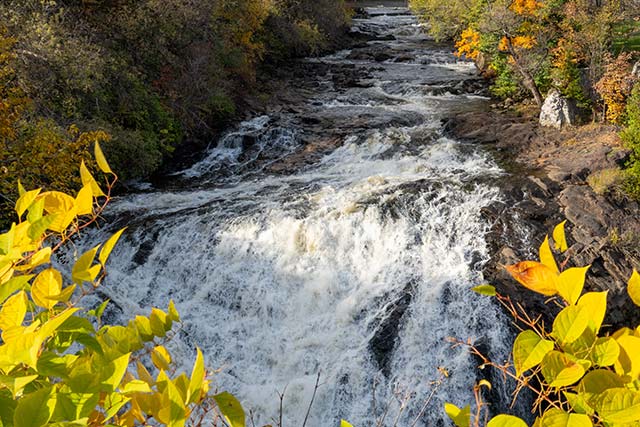
They include mountains, forests, watersheds and island territories, as well as one particularly remarkable example: Québec City, which has become the first entire city to receive UNESCO biosphere reserve status.
This development confirms a strong trend: biosphere reserves are no longer associated only with isolated natural areas. They are becoming true testing grounds where nature, economic development, culture and quality of life are shaped together.
The Minett Biosphere: an already atypical model
Located in southern Luxembourg, the Minett UNESCO Biosphere covers around 20,000 hectares and brings together nearly one third of the country’s population. Its unique character lies in the coexistence of urban areas, former mining sites, forests, valleys and natural habitats of high ecological value.
This combination of industrial heritage, biodiversity and high population density already makes the Minett Biosphere a territory that is particularly representative of 21st-century challenges: ecological transition, climate adaptation, landscape conversion and improving residents’ quality of life.
Québec City: important recognition for urban territories
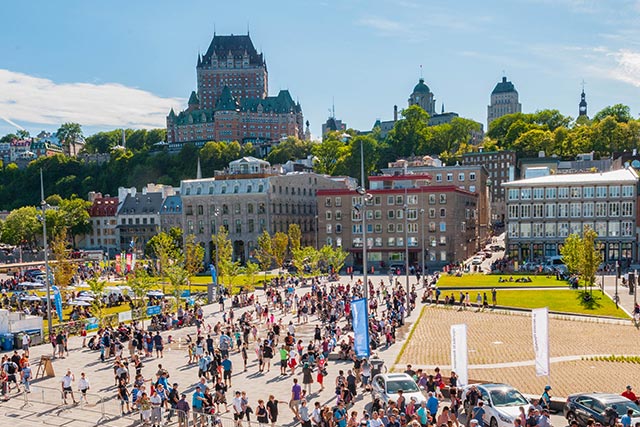
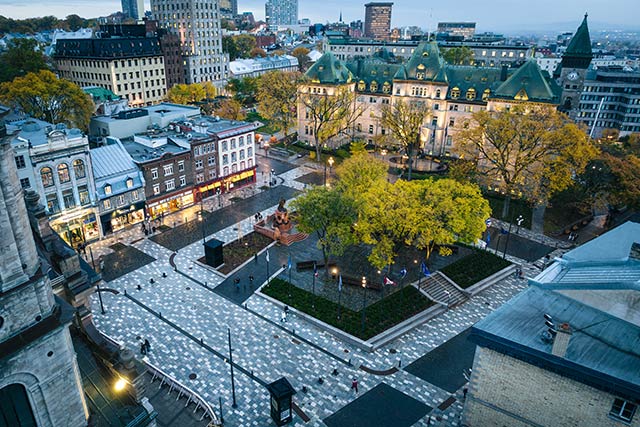
The example of Québec City deserves particular attention. By becoming the first city to be fully recognised as a biosphere reserve, it demonstrates that biodiversity conservation and urban planning can be considered together on a large scale.
 |
 |
 |
 |
 |
 |
© Ville de Québec / Source : www.unesco.org
For the Minett Biosphere, this international recognition sends a strong signal: urban and post-industrial territories fully belong within the MAB network. Nature protection does not stand in opposition to human development. On the contrary, it can become a driver of the sustainable transformation of cities and their surrounding areas.
Restoring landscapes and reconnecting territories
Several of the new biosphere reserves focus on ecological restoration, landscape resilience and the sustainable management of natural resources. The examples of Serra da Estrela in Portugal, the Skadar Lake Watershed in Montenegro and Sur del Alto Paraná in Paraguay illustrate this ambition to reconcile ecosystem preservation with human activities.
This approach has particular resonance in southern Luxembourg, where former mining sites have gradually given way to new natural habitats that are now recognised for their exceptional ecological richness. Industrial wastelands transformed into reservoirs of biodiversity are among the most emblematic features of the Minett UNESCO Biosphere.
International cooperation and exchange of good practices
The new strategic plan adopted by the MAB Programme for the period 2026-2035 explicitly encourages biosphere reserves to develop partnerships, exchange programmes and international cooperation. The aim is to share knowledge, methods and locally developed innovations.
Biosphere reserves are expected to become even more strongly “living laboratories” where local authorities, researchers, citizens, associations and economic actors jointly test sustainable solutions.
For the Minett UNESCO Biosphere, the arrival of these 14 new territories is therefore much more than a simple expansion of the global network. It confirms that the values carried by our region — cooperation, innovation, ecological restoration and citizen engagement — are now at the heart of UNESCO’s international vision for the years to come.