


Education & conferences
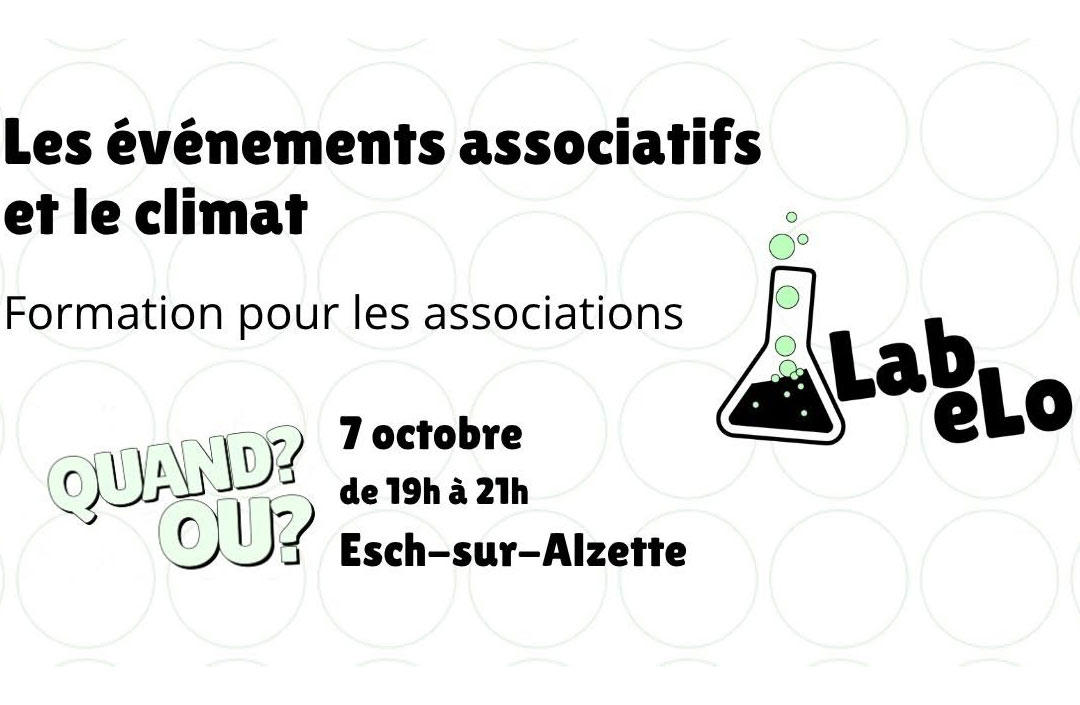
Community Events and the Climate
Workshop offered by the Interreg-project eLo
Date(s)
Organising an event is not limited to the event day itself. From initial planning through to post-event activities, many tasks are required: purchasing, travel, logistics, communication, welcoming attendees, catering, waste management, dismantling and more.
All these activities affect the climate and the environment. They also take place in a context in which associations face new realities: changing patterns of volunteering, rising costs, pressure on funding, more complex regulations and new audience expectations.
This workshop invites you to take a step back and assess how you organise your events, better understand their impacts and discover how more sustainable practices can also help address some of the challenges associations encounter.
Objectives
• Understand the different phases in an event’s life cycle • Highlight the activities required to organise it • Identify their main environmental, social, economic and territorial impacts • Recognise the developments currently influencing the organisation of community events • Explore ways to reduce negative impacts and strengthen positive ones • Discover how a single solution can address several challenges
Programme
Using a specific event as a starting point, you will collectively reconstruct the different stages of its life cycle and the activities required to organise it. You will then identify what has changed in the context in which associations operate and the difficulties that may influence the organisation of your events. Based on the activities identified, you will explore their impacts: travel, purchasing and food, energy, waste and reuse, communication, inclusion, the local area, nature and quality of life.
The group will then look for alternative approaches and compare the proposed solutions with the challenges associations face. The aim is to demonstrate that a more sustainable solution can sometimes provide several benefits: reducing environmental impacts while also controlling certain costs, simplifying some practices and encouraging shared resources, strengthening cooperation or enhancing the association’s appeal.
Contact information for this event
Phone: +352 26 17 97 1
E-mail: info@elo.lu
Internet: https://elo.lu/
Free Workshop:
Click on this link to register