


UNESCO, industrial culture and living heritage in the Minett
What connects the former mining and steel industry in the Minett, the biodiversity in our nature reserves and traditions such as Saint Barbara’s Day? They are all part of a cultural and natural heritage that shapes our region and gives it a unique identity. But how can we preserve this heritage while shaping the future?
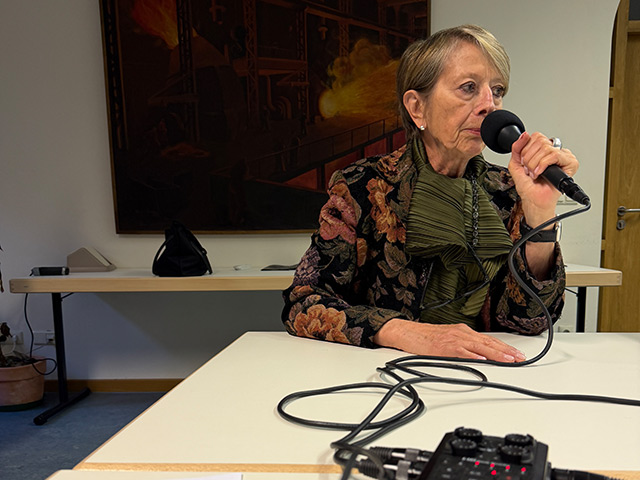
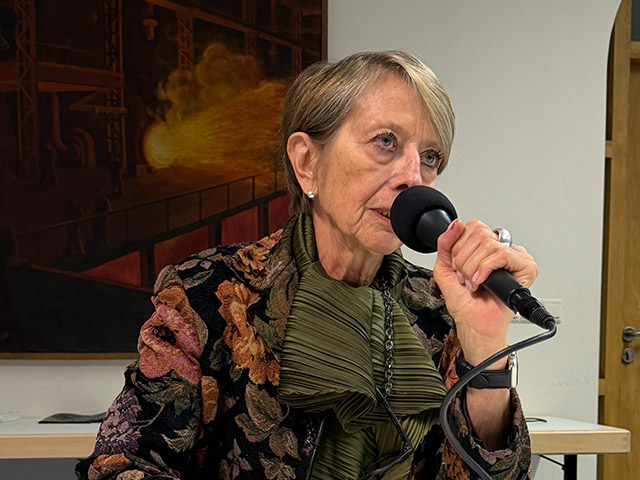
In episode 55 of Minett Mash-Up, we welcome Simone Beck, President of the Luxembourg Commission for UNESCO. We talk to her about UNESCO’s role, the development of the Minett UNESCO Biosphere and the importance of industrial and intangible cultural heritage. We also explore how nature, culture and human activities can be brought together in a region like the Minett.
Our “Minett Location” of the month: Ellergronn
For this episode, we visit the Ellergronn Nature Conservation Centre in Esch-sur-Alzette. This former mining site is now a place where industrial history and nature come together in a distinctive way. It is one of the core areas of the Minett UNESCO Biosphere, which also has its offices here.
Ellergronn exemplifies the transformation of the Minett. Where iron ore was once mined, valuable habitats for animals and plants have now developed. At the same time, the preserved buildings and traces of industry recall the work and lives of the generations who shaped this region.
This connection between the industrial past and the development of nature is also one of the reasons why the Minett was recognised as Luxembourg’s first UNESCO biosphere reserve in 2020.
Our guest: Simone Beck
Simone Beck has been President of the Luxembourg Commission for UNESCO since 2015 and is committed to promoting cultural and natural heritage.
In our conversation, we explain what UNESCO actually does and how its various programmes work. Alongside the well-known UNESCO World Cultural Heritage programme, we discuss documentary heritage, intangible cultural heritage and the scientific “Man and the Biosphere” Programme, to which the Minett UNESCO Biosphere belongs.
A particular focus is the role of biosphere reserves. They are not only nature reserves, but also model regions for sustainable development, bringing together biodiversity conservation, human coexistence and research.
We also discuss the development of the Minett UNESCO Biosphere, which is managed by the PRO-SUD intermunicipal association and its 11 member municipalities. Another major topic is industrial culture. With Simone Beck, we discuss how the industrial past has shaped the Minett’s identity and how former industrial sites, traditions and work-related knowledge can become a resource for the future. We also take a look at the concept behind the Centre national de la culture industrielle (CNCI).
Finally, we turn to intangible cultural heritage. Traditions such as Saint Barbara’s Day and transhumance show that heritage consists not only of buildings and objects, but also of knowledge, customs and skills passed down from generation to generation. How can these traditions be kept alive even as the original occupations disappear or change considerably?
 |
 |
 |
© Minett UNESCO Biosphere
Unser Quiz
How many UNESCO biosphere reserves are there worldwide?
- 612 in 109 countries
- 783 in 132 countries
- 797 in 145 countries
In which year was Saint Barbara’s Day added to Luxembourg’s national inventory of intangible cultural heritage?
- 2020
- 2022
- 2023
A UNESCO biosphere reserve has three main functions. Besides biodiversity conservation and sustainable development, there is a third. What is it?
- Developing tourism throughout the entire territory
- Supporting research, education, training and environmental monitoring
- Certifying local businesses according to UNESCO criteria
Links to the topics covered in this episode
- UNESCO – United Nations Educational, Scientific and Cultural Organization.
- Luxembourg Commission for UNESCO – Information about UNESCO and its representation in Luxembourg.
- UNESCO World Cultural and Natural Heritage – International list of cultural and natural sites of outstanding universal value.
- UNESCO documentary heritage – The “Memory of the World” Programme for the preservation of documentary heritage.
- UNESCO list of intangible cultural heritage – International recognition of living traditions, customs and cultural practices.
- UNESCO “Man and the Biosphere” Programme – Scientific programme for a sustainable relationship between people and nature.
- Minett UNESCO Biosphere – Official UNESCO profile of Luxembourg’s first biosphere reserve.
- Roberto Traversini – Former mayor of Differdange, during whose PRO-SUD presidency the Minett became a biosphere reserve.
- Nomination dossier for the Minett UNESCO Biosphere.
- MiNELL – The Minett UNESCO Biosphere’s environmental education programme.
- Musée de l’Ardoise de Martelange – Candidate to become Luxembourg’s second World Heritage Site.
- Rout Lëns – Former industrial site in Esch-sur-Alzette currently being transformed into a new urban neighbourhood by a private investor.
- Belval blower hall – Industrial heritage at Belval awaiting a new use.
- Belval – Neighbourhood spanning Esch-sur-Alzette and Belvaux, developed on part of the former Esch-Belval steelworks.
- Minett Mash-Up with Carlo Pallucca – Podcast episode about the last shift at Blast Furnace B.
- The CNCI concept – From the idea to the Centre National de la Culture Industrielle.
- Giele Botter – Core area of the Minett UNESCO Biosphere between Pétange and Niederkorn.
- Titelberg – Former Celtic settlement near Giele Botter.
- “Bei der Giedel” restaurant – Traditional miners’ bistro in Fond-de-Gras.
- Intangible cultural heritage in Luxembourg – Official website of the Ministry of Culture.
- Saint Barbara’s Day – Intangible cultural heritage in the Minett.
- Transhumance – Intangible cultural heritage of humanity also practised in the Minett.
- Hopping procession of Echternach – Luxembourg’s first inscription on UNESCO’s list of intangible cultural heritage of humanity.
- Biosfera Castro Verde – Biosphere reserve in Portugal.
- Riserva della Biosfera CollinaPo – Urban biosphere reserve in Italy.
- Région de Biosphère de Québec – Urban biosphere reserve in Canada.

Contact us:
 |
 |
 |