



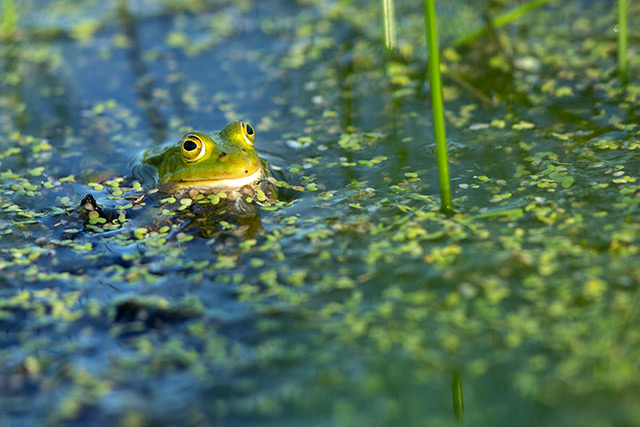
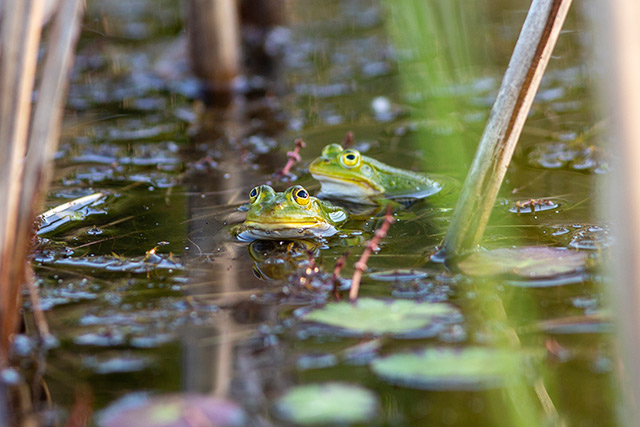
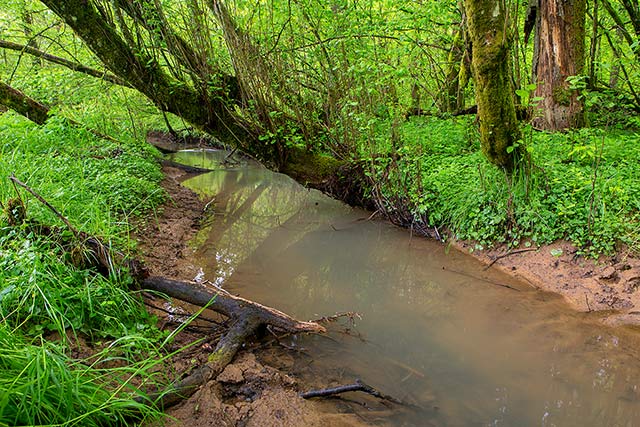
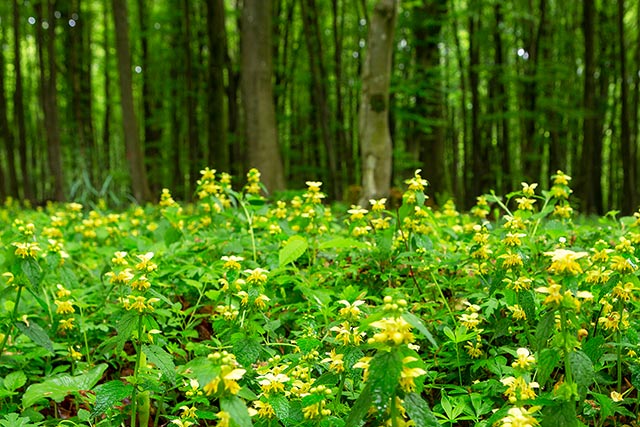
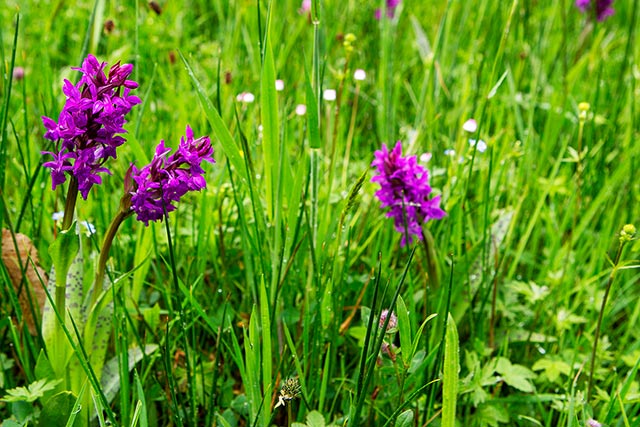
Here, water is reclaiming its space. In Moukebrill and Reifelswenkel, forests, meadows and wetlands come together in a landscape where the restoration of natural habitats helps preserve remarkable biodiversity.
 |
 |
 |
 |
 |
 |
© Marc Weis
Moukebrill / Reifelswenkel: a mosaic of natural habitats
This buffer zone is closely linked to two Special Areas of Conservation within the Natura 2000 network: Fingig – Reifelswenkel (LU0001054), covering 90.8 hectares, and Grass – Moukebrill (LU0001070), covering 200.72 hectares. Both belong to the Continental biogeographical region.
The core zones of a biosphere reserve aim to ensure the long-term conservation of Europe’s valuable or highly threatened habitats and species. This is based on the sustainable use of land, reconciling the conservation of biological diversity with human activities.
Forests, meadows and water: valuable habitats
What makes this area special is the diversity of its habitats.
The Fingig – Reifelswenkel protected area contains native beech forests, alluvial forests, lowland hay meadows and Molinia meadows.
In Grass at Moukebrill, forests play an even greater role: the area includes 141.2 hectares of beech forest and 17.72 hectares of oak-hornbeam forest, among other habitats, alongside further water-dependent habitats.
This proximity of forests, open land and wetlands contributes to the ecological diversity of this part of the Minett UNESCO Biosphere.
Moukebrill: giving water back its space
The recent history of Moukebrill also shows that degraded natural habitats can be restored.
A 2.2-hectare wetland plot was drained around 1980 as part of a land consolidation scheme, causing extensive areas of Molinia meadow to disappear. A restoration project led by the municipality, the Sicona nature conservation syndicate and the responsible ministry subsequently aimed to reverse the drainage, restore the meadows and create three small ponds, particularly for the great crested newt (Triturus cristatus).
These measures provide a concrete example of how human action can help restore degraded habitats and give water back its place in the landscape.
Reconnecting landscapes
Moukebrill and Reifelswenkel also remind us that natural areas do not function as isolated islands. Preserving biodiversity also depends on the connections between forests, meadows, wetlands and other habitats.
This is precisely one of the challenges facing the Natura 2000 network and a biosphere reserve: preserving spaces that allow species to move and ecosystems to function properly.
In this buffer zone, preserving biodiversity therefore means protecting a mosaic of natural habitats, restoring the connections between them and, above all, giving water back its full place in the landscape.