


Passion for industrial history
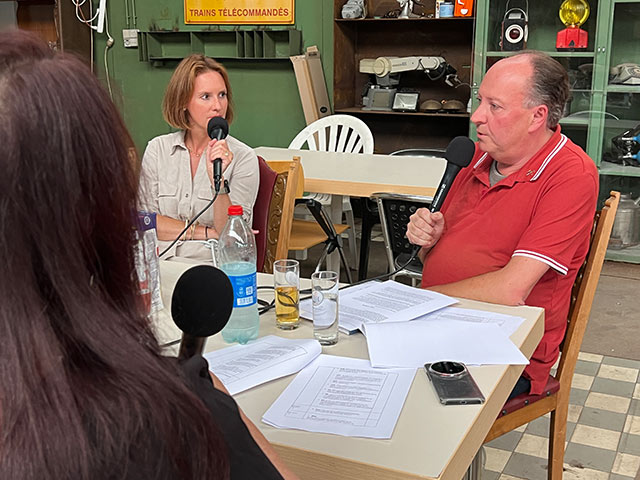
How do you tell the story of a region shaped by iron, steel, and the people who worked and lived here? In episode 53 of Minett Mash-Up, Pascal Plein takes us to a place where the industrial heritage of the Minett can still be felt very directly: the Pompelhaus at Metzeschmelz. Between listed monuments, personal passion and collective memory, the episode explores how this heritage can be told, shared and preserved today.
Our “Minett location” of the month: Pompelhaus, Metzeschmelz
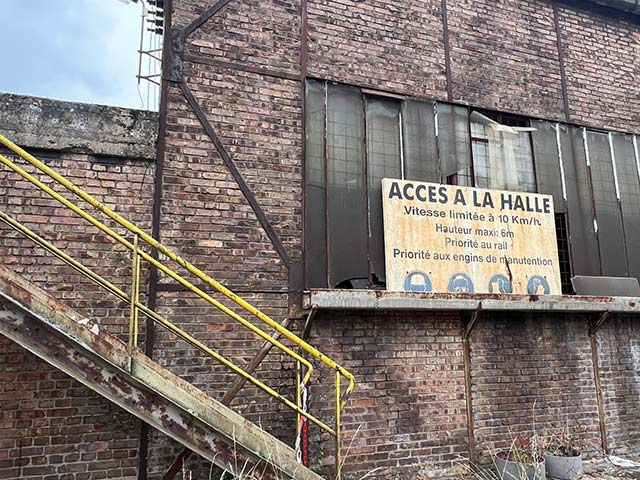
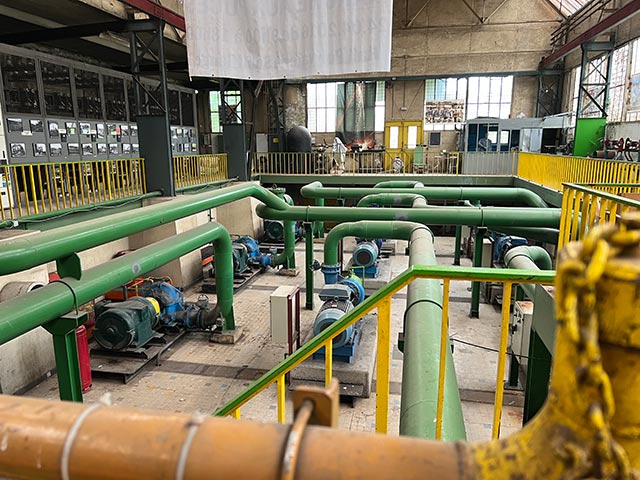
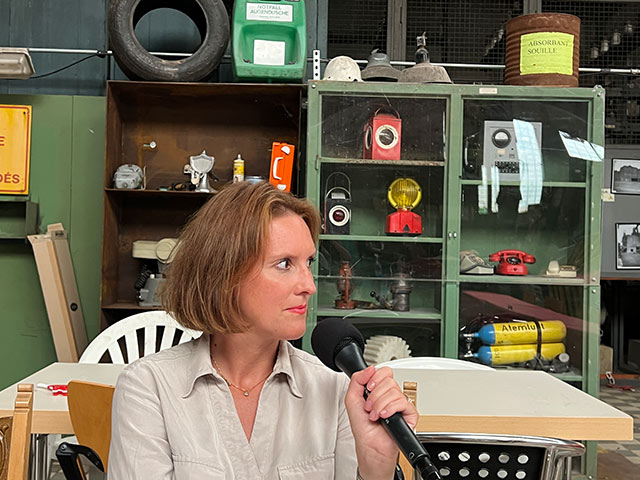
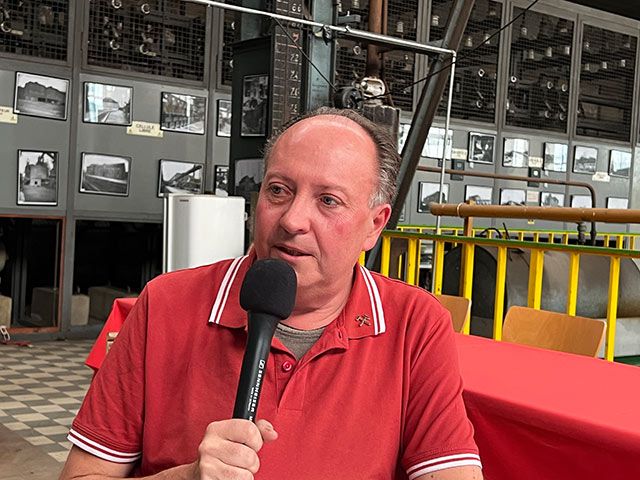
For this episode, Pascal Plein chose the Pompelhaus at Metzeschmelz as the recording location. The site symbolises the Minett’s industrial past and shows how closely technology, work, water, steel production and regional identity are connected.
The Pompelhaus and the water tower are listed monuments. The conversation therefore focuses not only on the history of this place, but also on why such witnesses of industrial development should be preserved for future generations.
Our guest: Pascal Plein
Pascal Plein did not work in the mine galleries or on the blast furnaces himself. But he lives the Minett, its history, its industry and its traditions. His passion for industrial culture is reflected in his knowledge, his collection and his commitment to various organisations connected with industrial heritage in Luxembourg, Saarland and France.
In this episode, we talk with him about his personal connection to the Minett, lesser-known places, Saint Barbara, associations, volunteers, working conditions in the early 20th century and the role of traditions and stories in preserving this collective memory.
 |
 |
 |
 |
 |
 |
© Minett UNESCO Biosphere
Our quiz
The industrial culture of the Minett also includes the former open-cast mining areas. What was their total surface area before the last open-cast mining area closed at the end of the 1970s?
- About 500 ha
- About 1200 ha
- About 1900 ha
In which year was the first miners’ trade union founded in Luxembourg?
- 1912
- 1916
- 1917
What was the main product manufactured at the Schifflange steelworks?
- Steel sheet piles
- Wire rod, in bars and coils
- Railway tracks
Links to the topics of this episode
- Metzeschmelz – Site of the former Esch-Schifflange steelworks, which remained in operation until the 2010s and is now being transformed into a new urban district. More information
- Pump House B of the Esch-Schifflange Steelworks – Building located on the steelworks site, now protected as a cultural heritage monument. More information
- Belval – The first industrial brownland in southern Luxembourg to be transformed into a residential and mixed-use district. More information
- AGORA – Company responsible for the redevelopment of former industrial sites in southern Luxembourg. More information
- Schmelzaarbechtermusée – Museum located on the Esch-Schifflange steelworks site. More information
- Luisenthal Mining Disaster – Major accident in a coal mine in Saarland, Germany. More information
- Léiffrächen – Core zone of the Minett Biosphere and memorial site dedicated to miners who lost their lives in Luxembourg’s mines. More information
- Thillenberg – The last mine in Luxembourg to close, in November 1981. More information
- St. Barbara’s Day (Bärbelendag) – Part of Luxembourg’s intangible cultural heritage and an important tradition in the Minett region. More information
- Strike of 1912 – The first major strike in Luxembourg’s steel industry, which took place at the Differdange steelworks. More information
- Miner’s Song (Biergaarbechterlidd) – Traditional song of Luxembourg’s miners. More information
Contact us
 |
 |
 |