


Slate, Work and Memory
This season, the story of underground work in Minett Mash-Up takes us not only to the former iron ore mines of southern Luxembourg. Underground labour also played an important role in the Éislek region, in a setting that forms a unique part of Luxembourg’s industrial history. In this episode, we explore the world of slate miners, slate extraction, life and work in Martelange, and a place where this heritage can still be experienced today.
Our “Minett Location” of the Month: The Slate Museum in Martelange
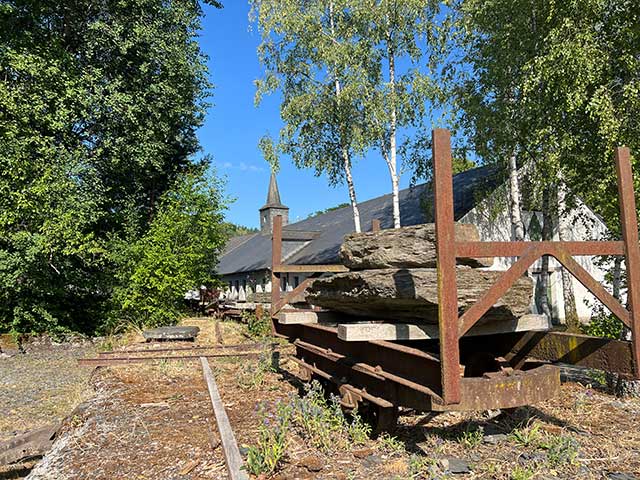
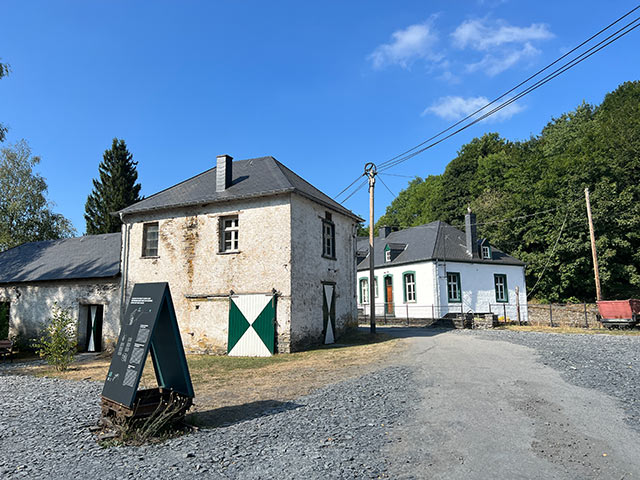
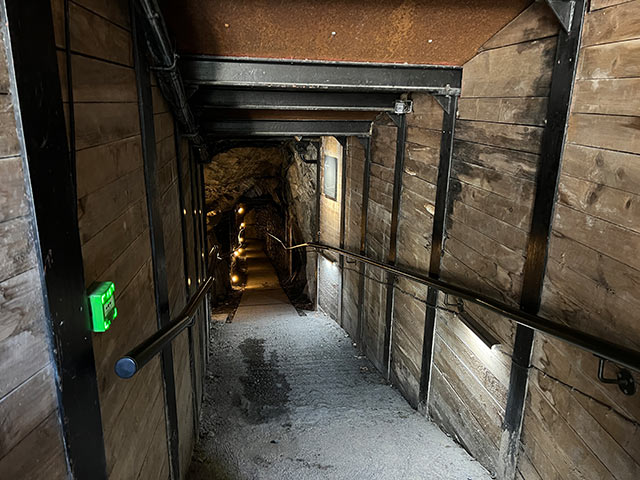
This time, Minett Mash-Up takes a “holiday” from the industrial south of Luxembourg and stops at the Slate Museum site in Upper Martelange. It is an extraordinary place: a nearly completely preserved industrial complex showing how slate was extracted, processed and used in construction. Here, history is not told solely through exhibition objects; it can still be felt in the buildings, galleries, machines and atmosphere of the site.
The site demonstrates the diversity of work linked to slate production: from underground extraction and processing to the social realities of the people who lived and worked here. Slate workers endured dampness, cold, dust and physically demanding labour, yet from this challenging working environment emerged a strong local identity.
These details make the Slate Museum much more than a podcast backdrop. It provides a gateway into an industrial past that can be compared to that of the Minett region without being identical to it. As in the iron mines of southern Luxembourg, the story here is one of labour, technology, pride, danger, solidarity and the challenge of keeping such heritage alive for future generations.
Our Guest: Doris Thilmany
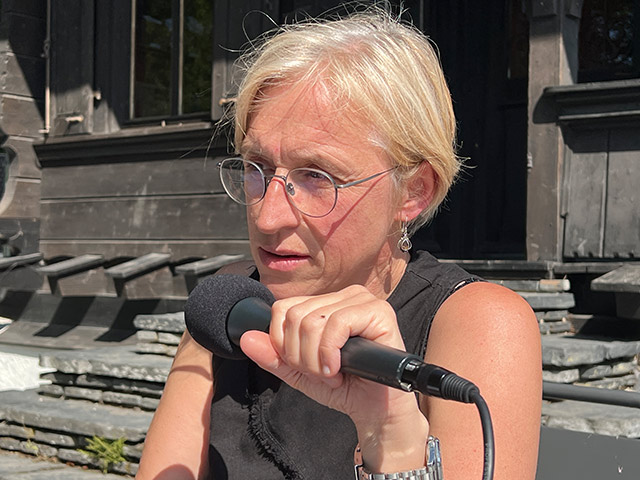
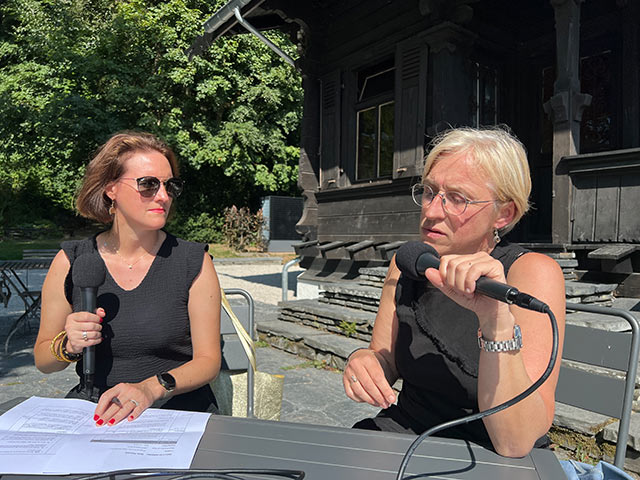
Our guest in this episode is Doris Thilmany, Director of the Slate Museum. We talk with her about what makes the Martelange site so special, how slate production operated here and how the site was transformed from an industrial facility into a museum.
The discussion goes far beyond buildings and machinery. Above all, it focuses on the people who worked here: their working conditions, technological developments, safety issues, social insurance schemes and workers’ health funds, as well as the long-term health risks associated with underground labour.
The conversation also addresses how such a story can be told today without losing its authenticity. How can life be brought back to an industrial site above and below ground? How can younger generations learn about a working world they never knew? And how can a museum help ensure that industrial heritage is not only preserved but also understood?
Another important topic in this episode is the Slate Museum’s nomination for UNESCO World Heritage status. If successful, the Martelange site would become Luxembourg’s second UNESCO World Heritage Site after the Old Town and Fortifications of Luxembourg. In the podcast, Doris Thilmany explains how such a nomination is developed, which partners are involved and why it is about much more than a label—it is about recognising a unique cultural and industrial heritage.
 |
 |
 |
 |
 |
 |
© Minett UNESCO Biosphere
Our Quiz:
In which geological era was the slate of the Éislek region formed?
- Quaternary (around 2 million years ago)
- Jurassic (around 150 million years ago)
- Devonian (around 400 million years ago)*
When was the very first official workers’ health insurance fund established in Martelange?
- 12 December 1901
- 4 October 1902*
- 2 February 1903
If the Slate Museum’s UNESCO World Heritage application is successful, it would become Luxembourg’s second UNESCO World Heritage Site after the Old Town and Fortifications of Luxembourg. When was Luxembourg City inscribed on the UNESCO World Heritage List?
- 1963
- 1989
- 1994*
Links related to this episode:
- Martelange Slate Museum: Historic industrial site where slate was formerly mined and processed.
- “Frënn vun der Lee” Association: Association that has been committed to preserving and restoring the Martelange site since the 1990s.
- Upper Martelange: Village on the Belgian border where the Slate Museum is located.
- Devonian Period: Geological period during which the slate of the Éisléck (Luxembourg Ardennes) was formed.
- Naturpark Öewersauer: One of three nature parks in northern and eastern Luxembourg.
- UNESCO World Heritage: UNESCO programme dedicated to the protection and preservation of historic sites.
- Silicosis: Lung disease that affected and continues to affect many miners.
- “Koll an Aktioun” Festival: Cultural and music festival held on the site of the Slate Museum.
- UNESCO International Geodiversity Day: Day dedicated to celebrating the geological diversity of our planet, including in Luxembourg.
Contact us:
 |
 |
 |